
Escambia County Criminal History Checks
Escambia County criminal history is split by record stage. A recent arrest may first appear in the sheriff roster or Atmore's separate city jail. Filed felony and misdemeanor cases belong to the Escambia Circuit Clerk or a municipal clerk. A statewide personal history comes from Alabama Law Enforcement Agency Criminal Justice Information Services and uses fingerprints. State prison records sit with the Alabama Department of Corrections. Start with the event and the likely custodian, not with a broad name search.
Gather a full legal name, prior names, a date of birth when lawfully available, an event date, and a case or booking number. Name spelling alone can create a false match. Fingerprints are the sound route for reviewing your own statewide identity history. Certified court records are the sound route for proving a case outcome.
- For current or very recent county custody, check the ECSO current roster and then its 48-hour release view.
- For filed Circuit or District charges, identify the court level and use Just One Look or the Circuit Clerk's request form.
- For a city ordinance, traffic, or municipal misdemeanor, contact Atmore, Brewton, or East Brewton Municipal Court instead of the county clerk.
- For your own statewide Alabama history, follow the ALEA personal CHRI review route with fingerprints and photo identification.
- For a sentenced state prisoner, use ADOC Inmate Search. Verify any final legal outcome with the court that entered it.
Four Escambia County Record Custodians
Four records can arise from one event, yet each answers a different question. The arresting agency writes the incident or arrest report. The detention center or city lockup creates the booking entry. The court keeps the filed charge, hearings, rulings, judgment, and sentence. ALEA links reported arrest cycles and dispositions to a fingerprint identity. These files can differ without any office being the universal source.
Match an incomplete Escambia County record to its custodian. A roster card is best for a custody fact. It is not the incident narrative. A court docket shows the prosecution, but it does not replace the police report. ALEA's history is identity based, but it is not a copy of every pleading or local agency narrative.
| Question | Escambia County channel | Best record |
|---|---|---|
| What did the agency report? | Arresting sheriff, city police, ALEA, campus, or tribal agency | Incident or arrest report |
| Is the person in recent custody? | ECSO detention roster or Atmore city jail | Booking and release entry |
| What charge was filed and how did it end? | Circuit, District, or municipal clerk | Case-action summary and judgment |
| What does my Alabama identity history report? | ALEA fingerprint review | Personal criminal history record information |
Official Background Checks in Alabama
Alabama has no unrestricted public name search for a complete statewide criminal history. The Alabama Background Check system is a secure subscription product for qualifying organizations. It should not be described as a public people-search portal. A person reviewing their own Alabama record uses ALEA Form 46, submits classifiable fingerprints from an authorized law-enforcement agency, includes a current photo ID, and pays by cashier's check or money order.
The ALEA personal review fee is $25. Extra copies are $5. The current form states that normal processing takes at least four to five weeks. The packet may be mailed to ALEA in Montgomery or delivered at its Ripley Street office. Escambia County residents should call ECSO or a city police department before visiting for prints because a local fingerprint fee and service schedule were not confirmed in the official county sources.
An FBI Identity History Summary is another subject-only product. It requires fingerprints and an $18 FBI fee, but it covers records reported to the FBI, not every Escambia County report or pleading. A certified local disposition is still the key comparison document when an outcome is missing or wrong.
Escambia County Custody Record Gaps
The Escambia County Sheriff's Office publishes current inmates and people released within 48 hours. Search controls include first or last name, alphabetical filters, booking-date or name order, and Show All. A profile may display age, sex, race, a booking number, arresting agency, booking time, charge text, bond, and release status. The roster warns that charges and bail can change after court action. Call 251-809-0741 when a new booking has not appeared or the details conflict.
The official Escambia County Sheriff's Office homepage shows how inmates, alerts, tips, and app access are grouped under the same agency.
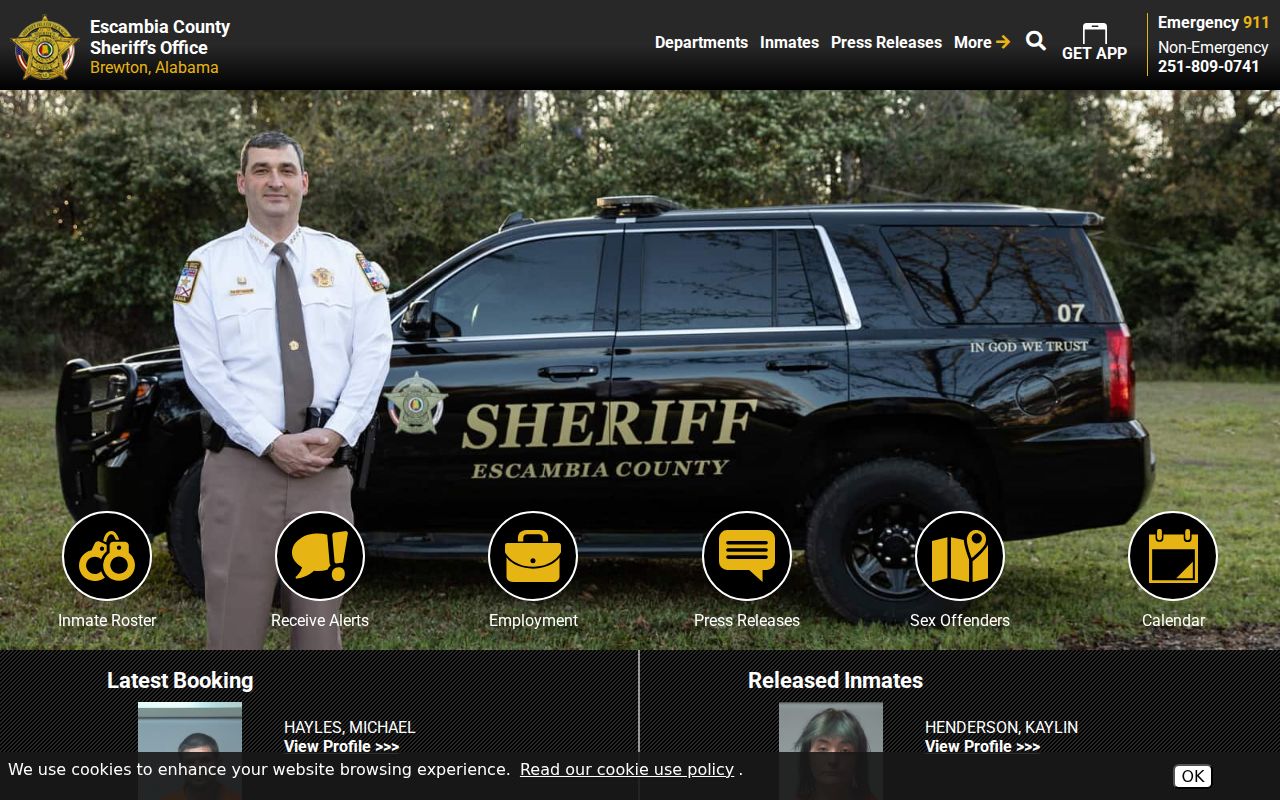
That grouping is useful, but it does not turn the sheriff site or app into a complete warrant, court, or statewide history system.
Atmore is the major local exception. Its police complex has a separate city jail, so an Atmore arrest may not begin on the ECSO roster. Call the Atmore booking and bond line at 251-368-9141. By contrast, Fountain and Holman are state facilities near Atmore, and their sentenced-prisoner records belong in ADOC's locator. A missing roster result can therefore mean the wrong custody system was checked.
Kinds of Criminal Records
Escambia County criminal records are created at different points and retained for different purposes. An incident report can describe officer action, the scene, witnesses, evidence, and the alleged basis for an arrest. A booking record focuses on intake, identity, immediate charges, bond, holds, and custody. The prosecutor and court then create the formal case file. A charge may change between those stages.
Other records do not fit neatly into the arrest-to-court path. A warrant begins with the issuing court and is executed by law enforcement. Probation appears in the sentencing court file, while state supervision is handled by the Alabama Bureau of Pardons and Paroles. Parole and prison records have their own state channels. The sex offender registry contains qualifying public registration data, not a list of all arrests for sexual misconduct.
- Police records: incident and arrest reports remain with the agency that created them.
- Booking records: ECSO or a city lockup records intake and custody facts.
- Court records: the right clerk keeps filed charges, events, outcomes, and sentence documents.
- Repository records: ALEA uses fingerprints to connect reported cycles to an identity.
- Corrections and supervision: ADOC and ABPP cover later custody and state supervision.
Escambia County Case Search vs CHRI
Just One Look and ALEA CHRI are not substitutes. Just One Look provides paid access to Alabama trial-court case information. A $9.99 name search includes results and one case detail, while a case-number search costs the same. No-match results are still charged. More case details cost more, and image purchases follow a separate page fee. A purchased snapshot remains tied to its purchase date rather than updating for free.
The official Just One Look access page presents the Alabama court record product used to locate trial-court cases.
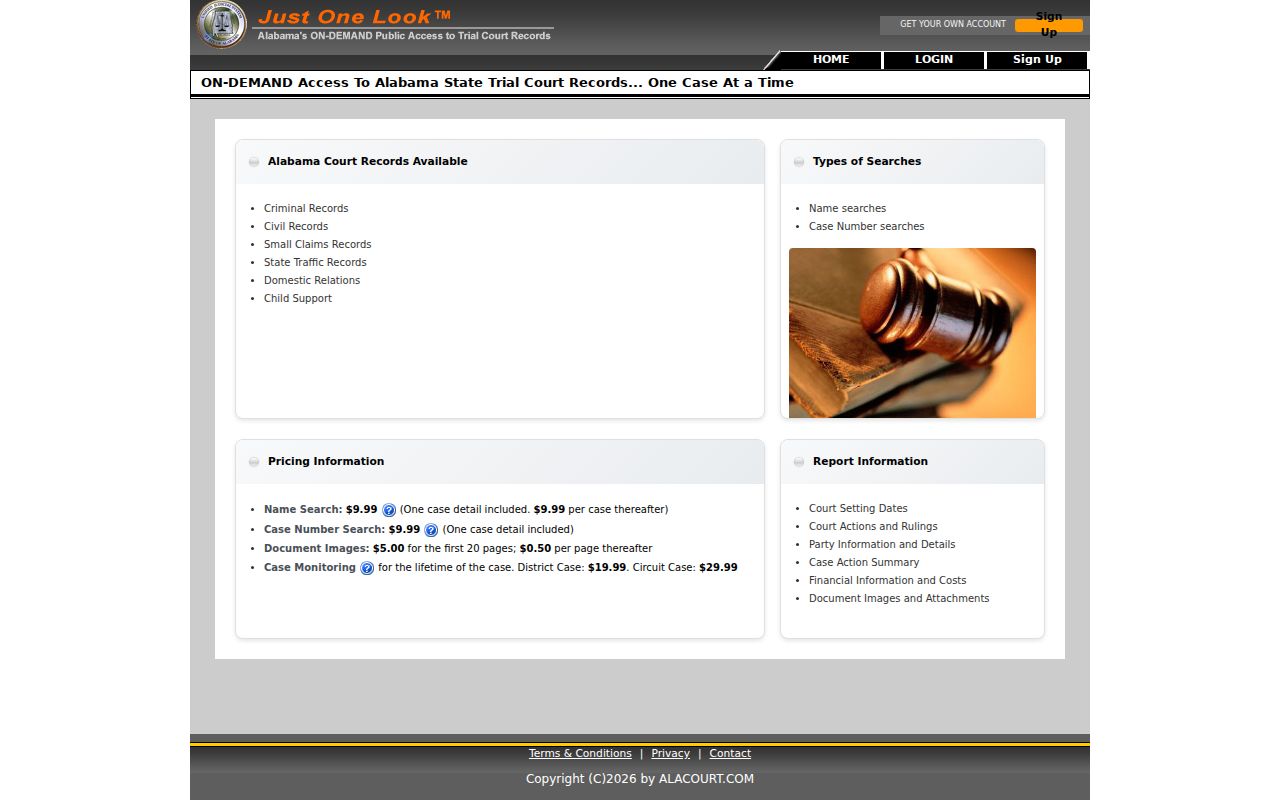
Use the Escambia Circuit Clerk when a certified disposition, archived record, or binding court copy is required. Its local form lists $10 for a computerized search, $20 for a paper search, and $25 for archive or microfilm work. Search fees apply even when no record is found. One to twenty copied pages cost $5, added pages cost 50 cents each, and certification adds $5 per case file.
Escambia County Criminal Records: What They Contain
A result must be read in context. Repository criminal history generally groups identity data with arrest cycles, court outcomes, custody, and supervision. A court case emphasizes the case number, filed charge, hearings, rulings, financial history, judgment, and sentence. A booking record emphasizes the intake moment. Treating one as though it contains the others can lead to a wrong conclusion.
| Name and identifiers | Legal name, aliases, birth data, sex, race, and identity numbers where the product lawfully displays them. |
|---|---|
| Arrest and booking data | Arrest date and agency, booking number and time, custody status, immediate charges, bond, and holds. |
| Charges and statutes | Alleged offense labels at arrest and formal counts later filed in the proper court. |
| Disposition | The result for each charge, such as conviction, acquittal, dismissal, or nolle prosequi. |
| Sentence | Custody, probation, fines, restitution, or other terms entered after a conviction. |
| Custody or supervision | County detention, state prison, probation, parole, release, or a related hold when reported. |
- Disposition
- The outcome recorded for a charge.
- Nolle prosequi
- A prosecutor's decision not to continue that charge.
- Capias
- A court command to take a person into custody.
- Case-action summary
- The dated sequence of filings, settings, rulings, and results in a court case.
Read the charge, disposition, and sentence as separate fields. An arrest allegation is not a filed count, and neither one proves a conviction without the later judgment.
Escambia County Booking-to-CHRI Flow
A local record changes as it moves. The arresting agency first creates a report. Intake staff confirm identity, inventory property, screen health and safety needs, take fingerprints and a photograph, assign a booking number, and enter charges or holds. A prosecutor then decides what to file. The court records later events and disposition. Those reported facts should return to state systems, but delay or incomplete reporting can leave the local case and ALEA response out of sync.
Record flow: Agency report → jail booking and fingerprints → prosecutor review → court case and disposition → ALEA criminal history.
The ALEA Criminal Justice Information Services overview identifies the state unit responsible for Alabama criminal history functions.
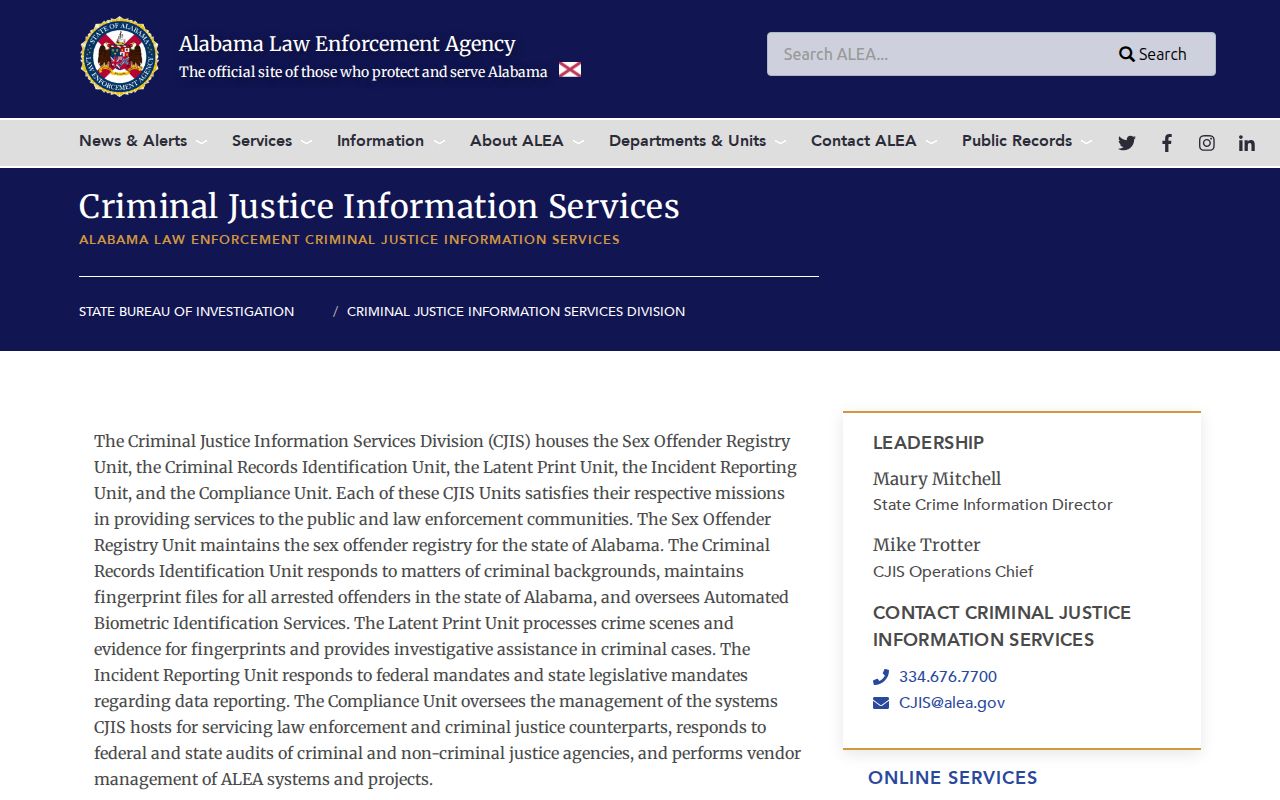
This state repository layer helps connect identity-based reports, but the originating Escambia County office still controls its own report or court document.
Alabama Public Access Laws
Alabama law begins with access to public writings, then applies record-specific limits. The correct custodian may charge for searches and copies. A public right does not erase restrictions for active investigations, juvenile or youthful-offender files, victims and minors, sealed material, or security-sensitive details. Court files also follow judicial rules and local clerk procedures.
Key Alabama statutes:
Ala. Code § 36-12-40 gives Alabama citizens a right to inspect and copy public writings, subject to legal exceptions.
Ala. Code §§ 41-9-590 through 41-9-645 governs criminal-justice information, access, dissemination, and correction.
Ala. Code Title 15, Chapter 27 controls eligibility and procedure for Alabama expungement.
Ala. Code § 15-20A-8 defines public information in Alabama's sex offender registry system.
Ask for the record by type, event date, location, case or incident number, and a clear date range. Request a redacted copy when only part may be withheld. Certified court copies come from the clerk, not from the sheriff roster or a saved search screen.
Escambia County Public Record Requests
ECSO did not publish a dedicated online records-request form in the official sources reviewed. Begin at 316 Court Street in Brewton or call 251-809-0741 to find the unit that holds an incident report, booking entry, local warrant information, or audio or video record. Ask for a fee estimate because the local sheriff copy fee and ID rule were not found. A narrow written request should state the event date and place, agency case number, record type, delivery preference, and willingness to accept lawful redaction.
The Circuit Clerk uses a different form. It asks for requester contact details, case name and number, identifying facts, the specific documents sought, mail or pickup, and whether certification is needed. Payment follows the clerk's estimate and must be by money order or cashier's check. Do not send that form to ECSO, and do not ask ECSO for a certified judgment.
The official Escambia County government directory is a useful cross-check for county offices and departments.
Alabama's 2024 response procedures generally call for acknowledgement of a simple request within ten business days and a substantive response within another fifteen. Those periods govern response steps, not guaranteed disclosure of exempt police material.
Restricted, Sealed & Expunged Records
Expungement under Alabama Chapter 27 depends on the exact charge, disposition, waiting period, prior history, financial obligations, and statutory exclusions. A dismissal alone does not prove eligibility. Current procedure generally calls for a petition in the criminal division of the circuit court in the county where the charge was filed, along with certified arrest and disposition material and a certified ALEA history.
The current statutory filing fee is $500 apart from ordinary court costs, though substantial-hardship handling should be confirmed with the clerk. Notice must reach the prosecutor, arresting agency, clerk, and each booking or record-holding agency. Missing one custodian can leave that copy outside the order. Expungement does not itself restore firearm rights, and some authorized government access can remain.
Sealed, confidential, and expunged are not synonyms. Juvenile and youthful-offender files follow separate rules. Victim information, active investigative material, and parts of registry or court systems can also be restricted for reasons unrelated to expungement.
Correcting Escambia County Criminal Records
If a dismissed Escambia County arrest still appears, first identify the stale source. Order the court's case-action summary and certified disposition. Compare those records with your ALEA personal review. A wrong court index should go to the clerk. A wrong agency report should go to that agency. ALEA's challenge process is for the repository response and requires official proof.
Form 46 Appendix A asks for the disputed charge, arrest date and agency, court and disposition, why the entry is wrong, and the facts believed correct. A challenge should include the ALEA response and certified or official support and be filed within one year of receiving the history. ALEA lists 334-676-7897 for correction questions.
An expungement order is different from a factual correction. After relief, retain certified copies, recheck the clerk index and ALEA self-review, and notify the source of any stale copy. Secondary copies may not disappear at the same moment as the government record.
City-by-City Criminal Records in Escambia County
Atmore, Brewton, and East Brewton are the three largest incorporated cities in Escambia County. Their police departments create local reports, and their municipal courts keep ordinance, traffic, and lower criminal matters within city jurisdiction. The city route matters because the county Circuit Clerk cannot supply a municipal file. Atmore also operates its own city jail, while Brewton and East Brewton require a call to confirm the booking custodian.
Atmore Record Check
8,310 estimated residents · separate police, city jail, municipal court, and ticket-payment channels
Brewton Record Check
5,129 estimated residents · city police, City Clerk records fallback, and municipal court
East Brewton Record Check
2,239 estimated residents · police and a monthly municipal court at City Hall
The official Atmore Police Department page shows the local police and city-jail channel.
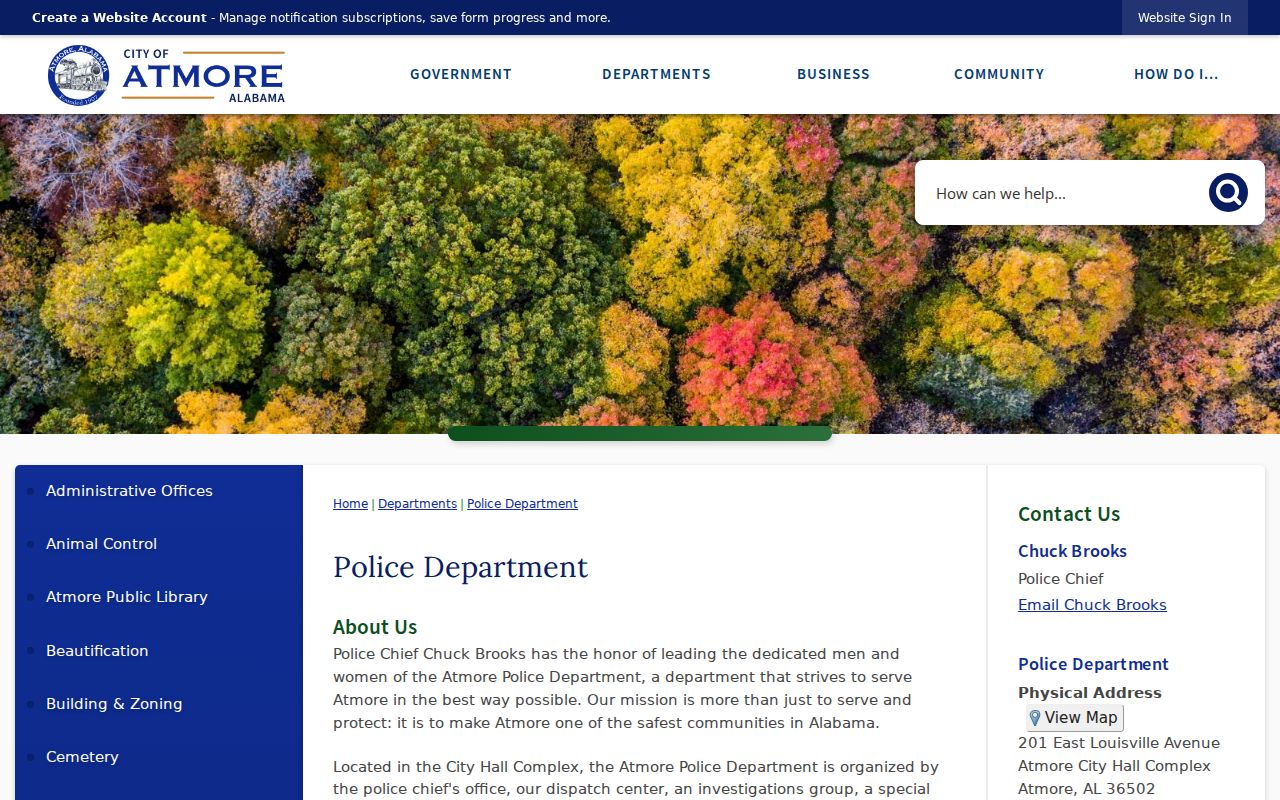
Atmore's distinct lockup is why a city booking may not begin in the county roster. The official East Brewton Police Department page confirms a separate municipal records starting point.
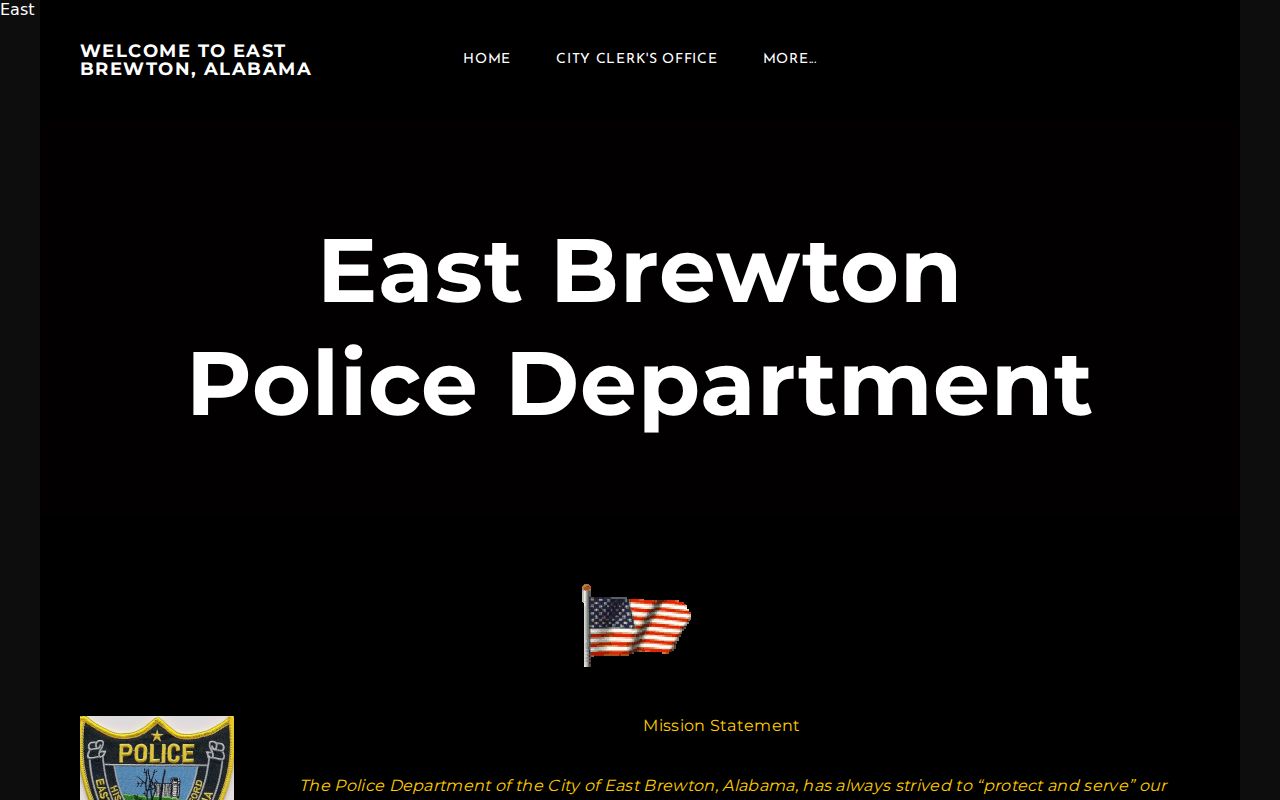
East Brewton's police report, city court file, and any county booking remain separate records even when the offices are close to Brewton.
Escambia County Warrants and Supervision
No complete ECSO active-warrant name search was located. The sheriff app advertises Most Wanted, but that is not a full warrant index. County felony and district warrants require direct verification with ECSO and the correct court. A municipal bench warrant belongs with the issuing city court. Absence from a roster or app proves nothing. Anyone resolving a personal warrant should obtain the warrant or case number, ask about appearance and bond instructions, and learn whether immediate custody is possible before appearing.
Probation and parole are also state-supervision records, not one open county name database. The sentencing court file shows that probation was imposed and may show revocation filings. The Alabama Bureau of Pardons and Paroles runs the Brewton Field Office at 400 Belleville Avenue, Suite C, and publishes 251-867-2471 for that office. ADOC remains the prison source, while ALAVINE or VINELink may add custody notifications where participating.
The ABPP field-office directory provides the official supervision contact route for Escambia County.
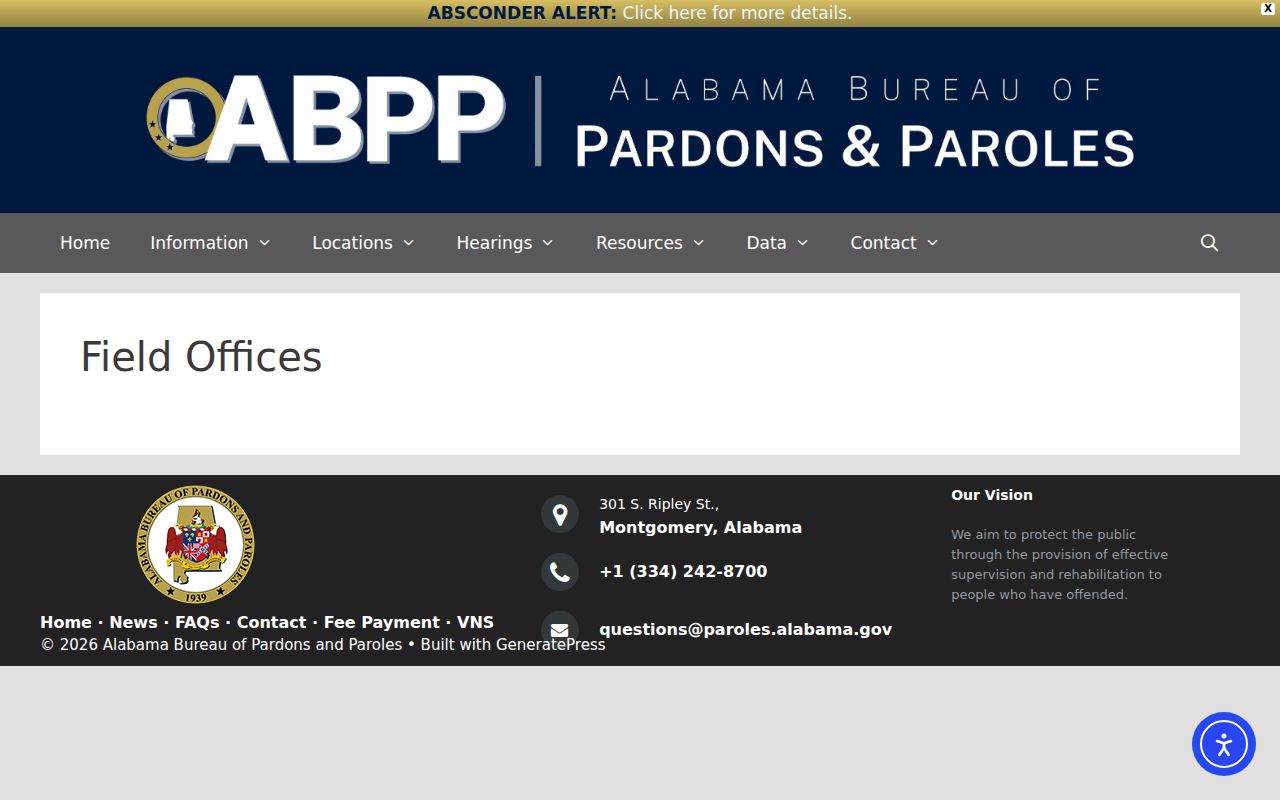
This final layer helps explain why a court sentence, a jail result, and current community supervision can appear in different systems.